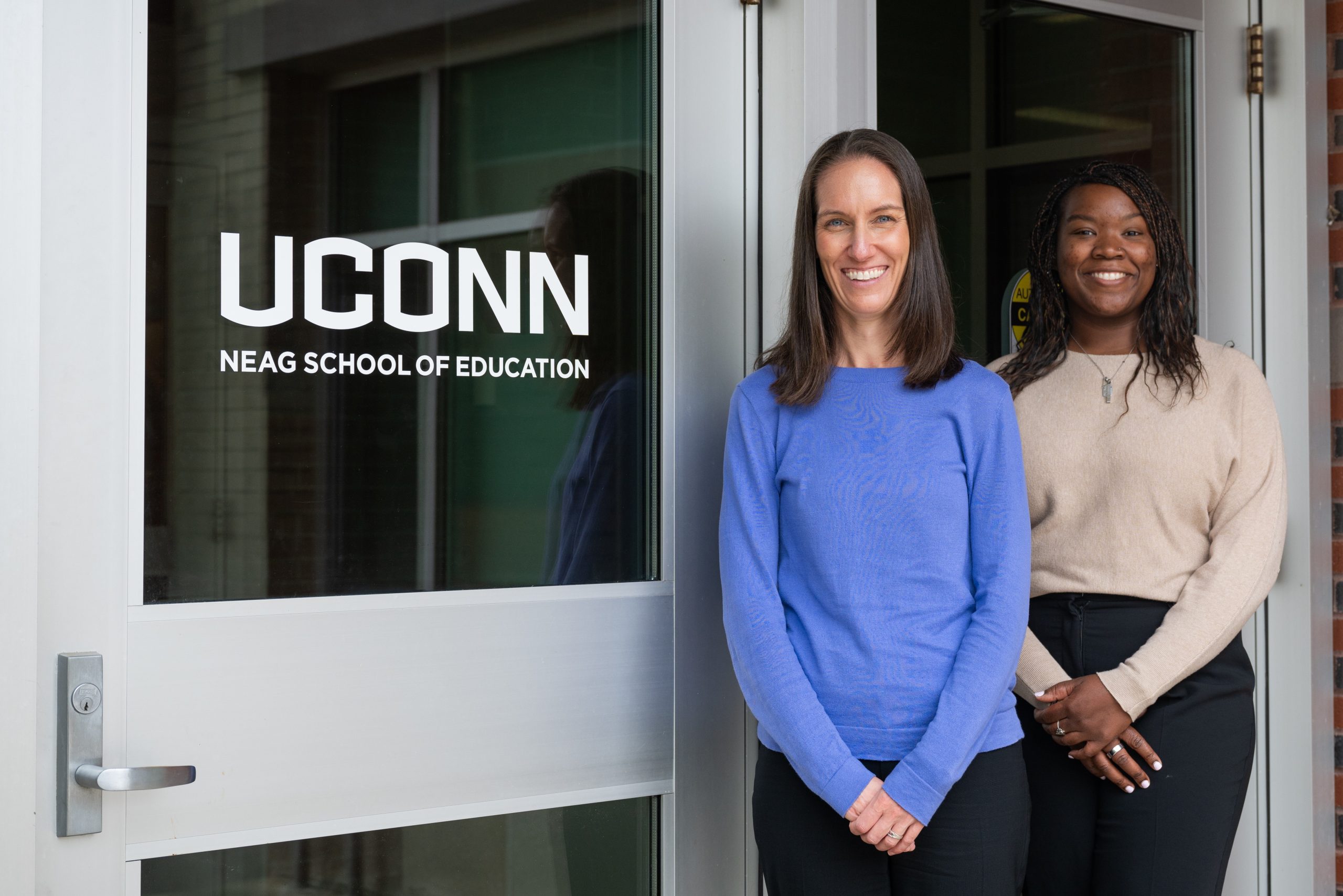
The Partners
Dr. Mallory Perry is an Assistant Professor at the UConn School of Nursing and pediatric critical care nurse at Connecticut Children’s Medical Center. Dr. Perry’s research focuses on outcomes for children treated for life threatening conditions. She is particularly interested in their functioning and well-being after discharge, including re-acclimation into school, subsequent mental health, and ongoing physical health.
Dr. Jessica Koslouski is an Assistant Research Professor at the UConn Neag School of Education. Her research focuses on social, emotional, and behavioral well-being of children and adolescents. Dr. Koslouski partners with schools to develop, implement, and evaluate interventions to promote student well-being, including Feel Your Best Self (FYBS). FYBS is an evidence-based program teaching children and their caregivers simple and fun emotion coping strategies.
The Origin Story
Jess reached out to Mallory after reading her CSCH Affiliate Profile and learning about her research and clinical work at Connecticut Children’s Medical Center. Jess was looking for a collaborator to bring Feel Your Best Self into pediatric medical settings and Mallory was excited about the partnership. Together, they were able to secure internal funding from the UConn Neag School of Education’s Dean’s Research Incentive Award to collect pilot data at Connecticut Children’s Medical Center. They then partnered with Dr. Katie Hinderer at Connecticut Children’s Research Institute, Connecticut Children’s Child Life Department, and their Family Resource Center.
The Project
The funded study had two parts. First, the team established a FYBS Table in the Family Resource Center, where families could explore FYBS materials, including strategy videos, story books, and coloring pages. Next, they recruited 11 caregiver-child pairs to use Feel Your Best Self on their own. The team taught them how to use the materials and then the caregivers tracked their use and gave feedback on both the materials and study procedures. This allowed the team to collect preliminary data before seeking funding for a larger research project studying FYBS in medical settings. Before this study, Feel Your Best Self had been primarily used and researched in school settings. Medical settings are another key place where families look for credible information about children’s emotional development. Medical procedures and diagnoses can also bring up a lot of emotions for children and families, making simple and fun emotion coping strategies particularly pertinent.
How its Going and What’s Next
The team has completed the initial study and is preparing a journal article with the findings of the study. They’ve had the opportunity to share their findings with local organizations. Now they are seeking external funding to continue the work. They want to continue researching implementation and dissemination in medical settings and increase the reach of the project so that more families are able to access FYBS through healthcare settings.
Reflecting on Interdisciplinary Partnerships
The partners reflected on how their interdisciplinary project has been successful. “Jess brings tremendous expertise related to Feel Your Best Self and children’s emotional development,” said Mallory. “My expertise relates to pediatric populations and research in hospital settings, so it made for an excellent pairing.” The team reported that humility, trust, and communication have helped strengthen their partnership. “Sometimes we don’t even realize how much of our knowledge is context-specific,” explained Jess. “Being willing to ask questions increases everyone’s understanding of the project, potential barriers, and key steps for success. In this project, Mallory and Katie brokered many of the relationships and meetings that enabled the project to be successful. Mallory’s expertise about family’s experiences of seeking medical care helped us to tailor outreach and recruitment in ways that were ultimately feasible and successful.”
To learn more, contact Jess or Mallory.
Resource
CSCH Brief – Team Science: Fostering Successful Collaborations in School and Child Health Research